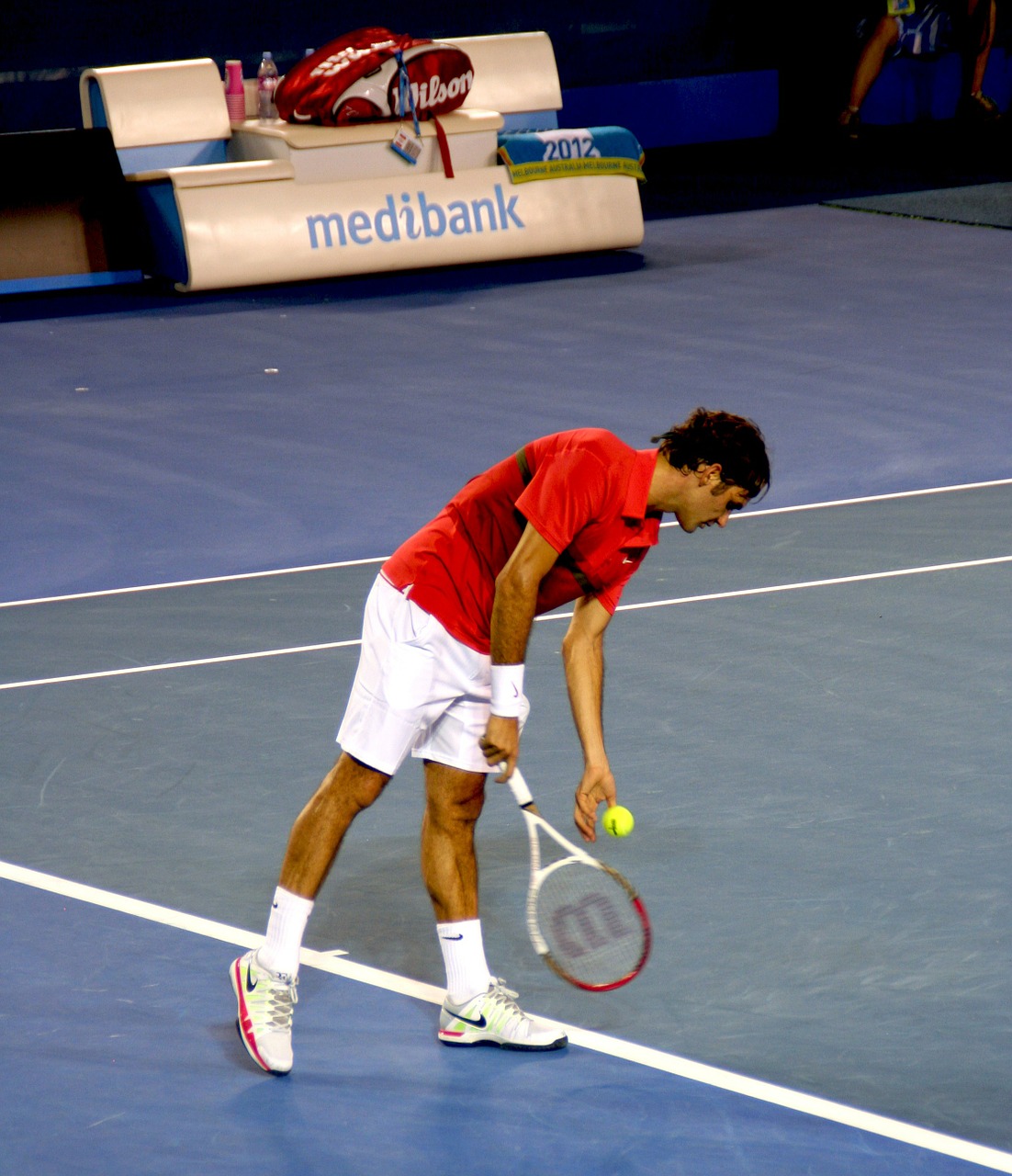
“I do get nervous…I’m happy I do…I feel that way because it means I care. It’s not like going through the motions…That would be a horrible feeling.”
-Roger Federer
All too often in life, we’re fed to believe that in big moments, nerves = bad. They’re easy to detect in others, and for some reason, we love to point them out, as if we’re being helpful. “What’s going on, you look tense…Are you nervous? Don’t be! Calm down, there’s no reason to be so anxious!” Am I tense, nervous, and anxious? Hell yeah, I am —and why shouldn’t I be? Nerves have nothing to do with preparation, confidence, or skill-level—-if that were the case, then how could the champions of the world still feel these butterflies before their own greatest tests? Federer, as mentioned above, continues to feels them. Mariano Rivera, the undisputed greatest closer of all time, when asked if he was nervous going into games, explained “Yeah…being nervous is okay. It’s part of being human.” And Michael Jordan, considered the most icy-veined assassin of all time, so eloquently said “I was pretty much nervous before every game…Being nervous isn’t bad. It just means something important is happening.” People often see nerves as a sign that you aren’t ready, haven’t prepared well enough, and that doom is surely headed your way if you don’t start feeling differently. They see nerves as a dark lord, he-who-must-not-be-admitted, cackling and plotting to destroy our efforts. But what if it wasn’t that way? What if—call me crazy—these elite-level athletes were right, and nerves were not our enemy, but rather a tough-love potions master—surely not interested in making friends with us, but ultimately looking out for our best interests? What if nerves weren’t a sign of the moment being too big, but rather an indication that the moment was absolutely perfect? I’ve been just as guilty of feeling guilty when I was nervous, as if I lacked the proper confidence that I needed to succeed in the challenge ahead. Little did I know that these constant bouts with nerves were one of the greatest bits of color I could ever bring my own life. Just like Snape, nerves have been cast as the villain, seeming too obvious not to be at fault for our worst moments. But from what we can draw from the power of nerves— evidence of passion, THAT FEELING, and incredible emotion—and their undeniable empathizable nature, it’s clear that they’ve been undeservedly blamed for far too long. Now, nerves get the redemption they deserve; and unlike Snape, this truth is revealed long before our journey’s final chapter.
Earlier this month, the 2020 US Open of Tennis was concluded (unfathomably, given the pandemic implications), ending in one of the most stressful, raw, vulnerable comebacks for the ages between Dominic Thiem and Alexander Zverev— two relative unknowns to the casual fan, but highly-touted up-and-comers on the tour. The match was a departure from the usual script we’re used to seeing— some combination of Federer, Rafael Nadal, Novak Djokovic, with special guests Andy Murray or Stan Wawrinka thrown in every once in a while. But it wasn’t just the new cast that made this one so unique— this championship, contrary to the status quo, was saturated with nerves, doubt, and tension. When we’ve seen the ‘Big Three’ show up to Grand Slam finals, very seldomly do we see nerves flaunt themselves as front and center as they did in this bout between the two young guns. Rather, we typically see the three legends use the stakes and drama to raise their game to the next gear, playing out of their minds, the highest quality of tennis, with the winner determined by who can raise the bar further and jump the highest. But this was quite the opposite— this match essentially became a conservative, mistake-ridden game of who could stumble over their own feet less dramatically. Thiem came out ice-cold, seemingly unable to play anywhere close to the level of a top tour player, let alone Grand Slam Finalist. He’d held his own against Nadal and Djokovic in past Grand Slam finals (taking Djokovic to 5 sets in the Australian Open finals earlier this year); yet when he was finally favored, he looked by far like the heavily overmatched underdog. Meanwhile, Zverev—a first-time Grand Slam finalist—came out red hot, striking winners from all over the court; That is, until he had the match nearly wrapped up (leading by two sets and a break), needing to simply put the routine finishing touches on this masterpiece. And that is where things started to get interesting…
We’ve seen this so many times in sports, as well as other aspects of life. As the moment gets bigger and the stakes get higher, so grows the internal weight of nerves heavier. Emotions becomes stronger as the tension builds. As we realize that a chapter in our journey is nearly complete—the light appearing from the end of tunnel, the finish line within sight, the reward of so much effort, focus, and hope within grasp—our stomach turns into a tornado of butterflies. Zverev was playing the biggest match of his life, and understandably, started to balk a bit when he began considering what this all could mean if he finished it out. The initial crowning achievement of any aspiring tennis player’s journey is winning a grand slam. As we progress in life, we have many “Grand Slam Moments” of our own— moments where nothing else could be more important, where you would do anything to succeed in the upcoming task. Grand Slam Moments don’t have to involve tennis, or any sport for that matter— it could be a night out with friends where you run into that girl you’ve pined over for months, and you’re determined to finally ask her out that evening. It could be professional—the final round of interviews for your dream job; or in many trial-by-fire lines of work, a practical exam that determines whether you continue moving on, or are forced to call it a ‘good effort’, and move on to a different career path. Any time you’ve labored toward a goal for a long while, and a benchmark moment arises where you can feel the elevated level of importance in the air, the building anticipation in your soul, and where the outcome is severely important to you—it’s a Grand Slam Moment. That internal response you feel is the nerves, consuming your body, creating a tidal wave that you can see approaching from the distance, the looming challenge ahead. And as you sit out there on your surfboard, eventually you realize that it’s too late to paddle back to the comforts of the shore, leaving you to risk your heart and ego to take on the tsunami of nerves. The wave is coming, and you’ve got two possible outcomes—let the moment overwhelm you, the nerves crushing you, sending you into a tumbling spiral of distress and disappointment; or rise the occasion, stand tall, and ride that wave of nerves into the thrill of a lifetime. The pressure’s on— pressure from the nerves from within, the doubt of outcome, and the tension of the follow-on life implications—as we hope to conquer the anxiety, and emerge victorious in these moments we’ve sought out for so long. Nerves, doubt, and tension— the recipe for an incredible showdown.
To this point in the match, Thiem had been suffering from what we commonly attribute as ‘letting your nerves get the best of you.’ Despite positive self-talk, endless prep, and your superstitious good luck pregame routine, the wave of nerves was crushing you. It’s an experience that leaves you feeling helpless, as if you’re on the verge of drowning. You’re metaphorically gasping for air whenever you can get it, desperate for a break in the tide; and if you’re not careful, it can have you quickly hitting either the ‘panic’ button, or worse: the ‘I don’t care anymore’ (also known as the ‘F*** this’) button. Both responses lead to destruction, and whether you bow out quickly due to desperation or disinterest, it’s an incredibly wasteful way to find yourself failing. But to Thiem’s credit, he chose the third option— Thiem chose to go out fighting. It sounds like such an obvious, clichéd concept, to ‘leave it all on the field,’ ‘go down swinging’, etc— but there’s more behind it than just the act. Going out fighting is admitting to ourselves “Yes—I feel the heat, the pressure, the nerves. Yes, I could drastically shift plans and try something radical, or just mentally check out, put some half-hearted effort in—quit—and have this miserable experience quickly wrapped up, pretending like it doesn’t matter that much. But I refuse. I refuse to deny how much this means to me. I refuse to aimlessly throw away an opportunity to take part in something I truly care about in life. And as agonizing as it may be if I ultimately fail in the end, I’m going to drag this out and spend as much time as I can living in this moment, because moments like these are the greatest thrills in life.” Why choose this route? Because Thiem cares. There’s something incredibly freeing about this self-confession—Owning up to how sick you feel with nerves is admitting how much you care about the challenge at hand. It’s admitting that to succeed would feel absolutely amazing, and to fail would be completely devastating. But above all, it’s admitting that you are spending your efforts doing something that you are legitimately passionate about—and what could be more satisfying in life than spending your days fighting for what you care for the most? To admit this truth to yourself is a liberating necessity, and in turn, can help you use those nerves for adrenaline, get your mind clear and body loose—and in Thiem’s case? Let you start performing like a pro, and start playing a hell of a lot better.
When we feel nerves, it’s exciting for far more than being a sign of us taking on meaningful challenges. In addition to that significance, the true beauty lies in the opportunity provided: the opportunity to chase “THAT FEELING”, and to reap the true reward that nerves provide—the resulting emotion. THAT FEELING— something so difficult to put into words that I can’t even think of a proper name for it. THAT FEELING is the feeling you get when the culmination of nerves, anticipation, hope, and anxiety is about to, within the next few moments, come to a dramatic conclusion toward one of two very different sides of the emotional spectrum. THAT FEELING is what you experience facing the boss battle of one of the most important levels in your life, with zero extra lives to spare. THAT FEELING is what Tom Brady feels in the Super Bowl, getting the ball with two minutes to go, trailing by four—touchdown or bust. THAT FEELING is the way you feel as you’ve mentally committed to making a move on that girl of your dreams, completely unsure as to how it’s going to pan out, yet going for it and leaning in for that first kiss regardless. THAT FEELING is seeing the holy grail trophy at the top of the mountain, knowing you can make it with one final sprint, but seeing your rival—the potential of failure—right beside you, making the same mad dash for the finish line. Winner takes all, loser left with nothing. THAT FEELING is the peak of nerves, the crest of the wave, the final countdown before the conclusion of the last act, knowing that everything could go so wonderfully right, or so horribly wrong; and that the subsequent impact will weigh heavily on your heart. The more nerves, the stronger THAT FEELING. You would never think stress could feel so damn exhilarating!
As Thiem started to turn his timid floundering into adrenaline-driven fighting, Zverev was struck by a word I hate to use, because it discredits the skill of so many athletes, but is something we all know well and can relate to—choking. Sometimes, it’s almost as if things are going too good, and we don’t believe it to be true, allowing malicious dominoes to fall toward a self-fulfilling prophecy of making it untrue. It’s as if we never envisioned things to be running this smoothly, so we subconsciously make them more difficult for ourselves. Regardless of the psychological reason behind it, the signs are blatantly obvious: The most routine of tasks become botched as we become athletically or mentally paralyzed at the prospect of success. Whatever was going on in his head, Zverev was clearly feeling this. Shots started sailing long, his first serve accuracy dropped, and his second serve speed plummeted. And this is where nerves can be the cruel teacher we need in life. The best lessons are best taught in the worst of moments; and in this match, Zverev learned a great lesson about the importance of finishing strong. You’d better believe that just as Thiem cared too much to let the match go away quietly, Zverev cared as much about not letting the match slip from his grasp. He knew it was a (literal) Grand Slam Moment for him; and as he approached the top of the mountain, he looked back to see where his rival was—miles behind him— and in hesitating by taking his eyes away from his own path, suffered a fatal stumble. Sometimes, when things seem too easy, and your mind starts to drift and imagine ways that things might not work out so well, you basically self-generate more nerves—we truly are addicted to them—until your destructive fantasies drive you to oblivion. Within an hour, Zverev had not only blown his two-set lead, but immediately went down a break to start the fifth and deciding set, and it seemed we were truly on our way toward THAT FEELING…
Nerves, leading to his sloppy, undisciplined tennis when it mattered most, were Zverev’s downfall, right? I mean, it makes too much sense: he was merely 23 years old, had no finals experience, playing the biggest match of his life…of course this was bound to happen against the slightly older, more experienced Thiem, wasn’t it? Critics will say that he wasn’t quite ready for the moment, and just needs to get more experience under his belt, and then won’t get those nerve demons next time. Well, if that was the case, how did the exact same thing—a two set and a break blown lead—happen in the US Open finals the year prior; to Rafael Nadal of all people, arguably the most mentally tough tennis player of all time? Nerves can get the best of us, no matter how many times we’ve ‘been there’, how well-prepared we are, or how mentally resilient we are. They never stop rearing their heads before crunch time, and they continue to build momentum, like a rolling snowball, until THAT FEELING finally arrives, where they put us on the verge of a heart attack with anxiety. But once again, they are not the villain. As Federer remarked in that opening quote, he feels legitimately happy when he feels nerves before a big match, and not only accepts them, but bemoans a life without them. Why? Because, as he also mentions and understands so adeptly: Nerves mean that we care. Nerves are a sign that the journey you’re taking, the challenge ahead of you, the ultimate test you face; it’s all a meaningful quest. To not feel nerves before competition, a date, or one of life’s biggest tests? It would mean that the outcome was irrelevant to you, that you couldn’t care less about how your performance goes. If you’re not challenging yourself with something that affects your ego, not reaching for aspirations that cause you some doubt as to whether you will succeed, not undergoing a quest where the realistic prospect and thought of failing gets you pissed? Then you are selling yourself short, and missing out on the true thrill in life! To imagine a life where you encountered no nerves…never felt any doubt…never considered failure to be a heart-wrenching outcome—a necessary evil at times, but still incredibly disappointing—what a dreadful life that would be. Federer described it best: you’d be “just going through the motions.” No thanks. Nerves can make us feel queasy, give us extreme discomfort, and leave us stressing hardcore— and yet, what a magnificent thing they are. Nerves are life; nerves are the color in our otherwise black and white movies; nerves are the emotion tied to the actions we take. And emotions, following THAT FEELING, are the endgame product, the reward for vying for challenges you care about, and accepting the byproduct nerves that join for the ride.
Zverev and Thiem’s final set was one for the ages—and by that, I mean it was the most expressive demonstration of nerves at the highest level that I’ve ever witnessed. After Thiem’s initial early break, Zverev broke back, and seemingly regained the upper hand, as now Thiem was the one playing cautiously, unable to finish the comeback that he had started. Back and forth—loads of double faults, reduced-speed overly-conservative second serves, and pushing—-oh man, was there pushing like I’ve never seen before! To anybody unfamiliar with the term, “pushing” was my bread and butter back in high school—the act of hitting the ball with so much spin and so little pace, utilizing a game plan of 1% aggression and 99% safety, playing with locked legs (your foundation of solid footwork was long gone by this point) and paralyzed courage, praying for the other guy to make a mistake so that you could escape with the win, rather than sinking your teeth in and earning the victory. An old coach of mine called it ‘playing not to lose, vice playing to win’, and that adage describes what Zverev and Thiem were doing to a tee. Both men were playing so passively and carefully, each hoping the other would manage to snatch defeat from the jaws of victory first. Eventually, Zverev found himself with a chance to serve for the championship at 5-3, a relatively routine duty for a pro—especially a 6’6” one—and managed to squander the opportunity. 15 minutes later, Thiem had that same opportunity at a score of 6-5, and found himself gifting it away as well. Ultimately, the championship was decided by a very shaky tiebreak, Thiem blowing two match points (including a 68-mph (!) second serve point from Zverev) before gaining a third opportunity, and finally winning the championship, slicing a backhand to the dead center of the court before Zverev sent the return backhand wide. Thiem collapsed to the court in ecstasy, and Zverev buried his head in his hands in agony, eventually shedding tears of heartbreak during his runner-up’s speech. Emotion in sports, in life, is often the outpouring result of this pent-up tension, doubt, and nerves— the true uncertainty of how something will conclude is the catalyst behind the most uninhibited displays of emotion— the incredible reward of facing the swell of all these combined feelings; be it happy or sad emotion.
Sad emotion, a reward? Absolutely. And when it happens, it’s ridiculously impossible to see it as a positive. But the crushing losses are part of the rollercoaster ride of life. When you put your ego on the line and skills to the true test, and especially when you reach the thrill of THAT FEELING, you’re not always going to have fantastic endings—for every big Brady win, I can remember even more vividly the strip-sack fumble against Philly, the pick-six against Tennessee ending his career in New England, and of course the 18-1 catastrophe. As a Rafael Nadal fan, I’ll never forget that incredible 2008 Wimbledon victory over Federer; but even more so, the 2012 Australian Open loss to Djokovic stands out as the greatest match I’ve ever seen, with a come-from-behind, now sprinting-toward-the-finish-line Nadal missing an easy, court-wide-open backhand that began the reversal of fortune, sending him to his ultimate fifth set demise. Although they might be sad moments, don’t think for a second that they aren’t positive emotions. Nadal sobbing in the locker room after the 2007 Wimbledon loss to Federer, or Federer doing the same on court after losing to Nadal in the 2009 Australian Open final…those displays are just as powerful as any celebratory one. It demonstrates that their heart was truly into it, and it most certainly isn’t a sign of weakness. Heartbreaking emotion is part of life when you aspire for more, and it’s critical to your development as a person. Brady said it best, when addressing what he said to his kids after that brutal, agonizing loss in Super Bowl 52— “It was the first time I had seen my kids really react in that way [both crying]. They were sad for me…sad for the Patriots…but, I just said to them ‘Look guys, this is a great lesson, you know—We don’t always win. We try our best, and sometimes it doesn’t go the way we want.” Brady’s kids felt that emotion, despite not being anywhere near involved in the actual game—which brings us to the other unique and wonderful element of nerves: their nature of empathy.
Watching Zverev and Thiem jab it out, mental warfare spillage everywhere…I couldn’t help but find it incredibly refreshing, seeing that familiar vulnerability, but in the biggest match of the largest tennis venue. The match was not the highest quality of tennis— not even close. Despite its dramatic conclusion, it was not even an entirely exciting match for the majority of it. And it was most definitely not a tutorial in demonstrating how to properly play with calculated aggression, confidence, and the closing skills of a champion. That all being said… it was one of the most fascinating, beautiful, emotional matches I’ve ever seen— purely credited to the relatability of the genuine care, passion, and twisted combination of hope, terror, and nerves that both men wore on their sleeves. I felt what they felt, to a degree, because I had totally been there before. I’ve blown a 6-1, 5-1, quintuple-match point lead, just to lose in a third set tiebreaker—and ended up bawling on the car ride home. It hurt…badly…and I felt as if I had a whiff of what those guys were feeling. Nerves are empathetic; when the world watched those two warriors tighten up and do whatever they needed to in order to not lose that match, because they cared so badly about winning, we felt it. We all felt that same tension at every late moment, our own hearts stopping when Zverev struck his second serve down match point, after double faulting more times than I’ve ever seen from a pro. It’s why we feel that same nervousness whenever our favorite team or athletes have those raised-stake, pressure-filled moments. In other words, athletes and fans share in the thrill of THAT FEELING. In a vacuum, it is absolutely ridiculous how nervous I get before every single Tom Brady playoff game. Literally holding my breath and clenching my entire body as every pass sails through the air on any crunch time drive— I almost feel as if I’m the one out there, expected to perform in the clutch. And no matter how many times I see it from Brady, I still get those same stomach knots every time he gets the ball, trailing, two minutes to go…You can never artificially replicate THAT FEELING, but you can sure feel traces of it when you dig into the pensieve of life’s memories. No kidding, whenever I watch highlights (dork alert) of that Super Bowl 51 comeback against Atlanta, I tense up on that game-tying drive, holding my breath when Edelman makes that incredible catch on what probably should’ve been a game-ending pick. And just the same, re-watching highlights of the 2008 Super Bowl (call me a masochist), I can still feel shades of THAT FEELING, hoping that this time when I watch, Asante Samuel will catch that interception, Tyree will drop that ball, or Brady will complete that 60-yard-ish desperation heave to Moss…Look, I get how stupid it sounds, feeling this about a team that I have literally no connection to. But as mentioned earlier, it truly is one of the most beautiful things in life, to see demonstrations of effort to accomplish things that people strive for and care that deeply about; and through empathy, we can feel those same passion-fueled nerves. That is why sports fans get so captivated— because trust me, I can guarantee you this: If the athletes didn’t care, then neither would we. That is what makes sports the best drama on television, and the raw authentic footage is absolutely unmatched by any other reality show out there.
Yes, sports is the best drama on television—And while I love that show, at the end of the day, it’s about our own lives. Your life is the real movie, the main event. Every great film has to have high stakes, some tense drama, and a bit of doubt if the hero will make it—does yours? Life is rife with Grand Slam Moments, if you seek them. There are plenty of opportunities to undergo challenges that fill you with nerves, where you are able to seek out THAT FEELING of the uninhibited thrill of uncertainty, and result in moments that will leave you bursting with emotion at the conclusion. Win or lose, succeed or fail…these experiences are what life is all about. Even in defeat—when we accept it, shed the tears, and move on hungrier, stronger, and more driven…THAT is progress. The emotion behind nerves is the color that fills our stories and makes them lively and vibrant. No matter how much pain a meaningful loss, failure, or rejection has ever caused me, I will take a life with nerve-wracking challenges 10/10 times over a nerve-less life with no pressure, no stakes, and no meaning. Struggle for the outcome you truly care about, chase those moments that drive you sick with nerves, and compete for life’s challenges that, win or lose, will have you in tears. And if doesn’t end so well? That passion will drive you to come back tougher, smarter, and better. Zverev had his share of tears on the grand stage; but he’s not anywhere close to done. And when he’s back, you’d better believe those nerves will still be present, if not fiercer. But, like Federer, he’ll know he can smile; the nerves’ presence simply means that he’s fighting a battle he truly cares for; his life has color, and it radiates with brilliance.
Interested in knowing when new articles are published? Subscribe to receive updates on where the chase goes next!
Critiques of ALL kind are welcome and incredibly appreciated! Feel free to send them to feedback@foreverchasingbetter.com; Be as harsh as you’d like— nobody gets better with a compliment…
 Forever Chasing Better